


By Philip Wood, Marketing, AdvancedTek
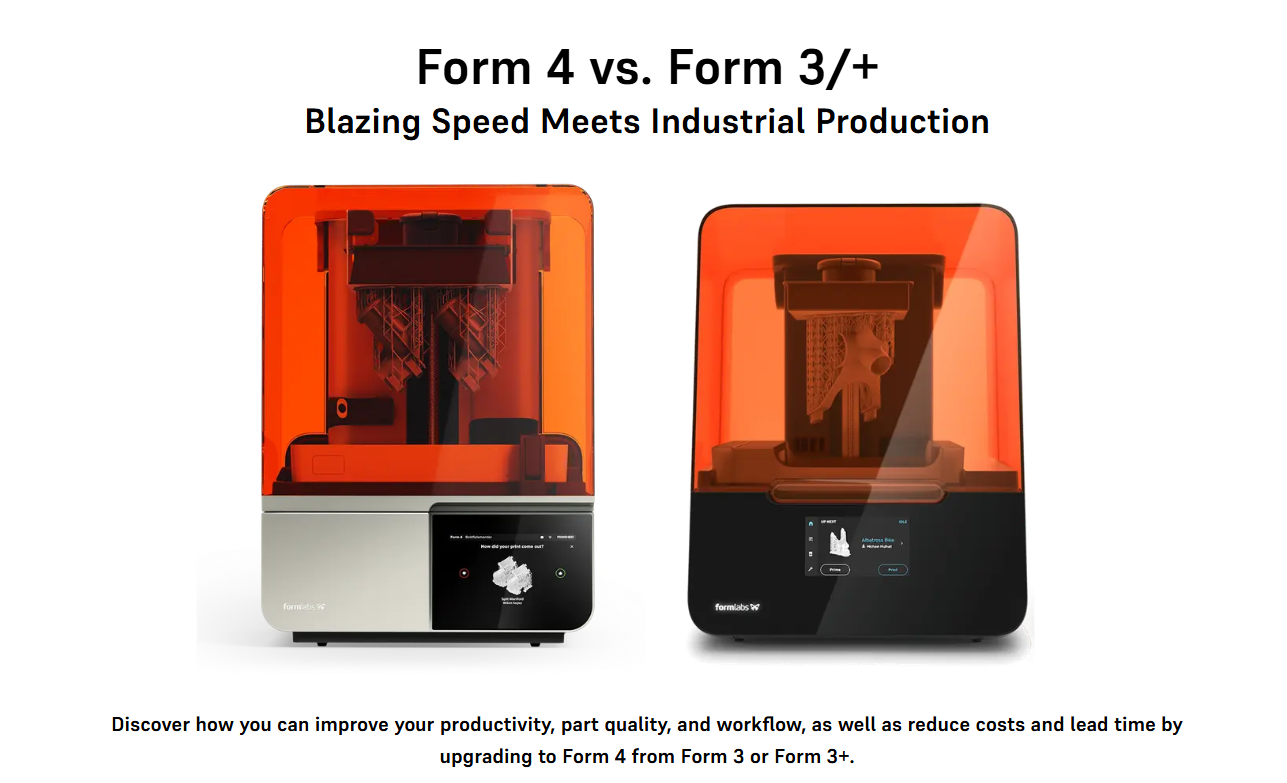
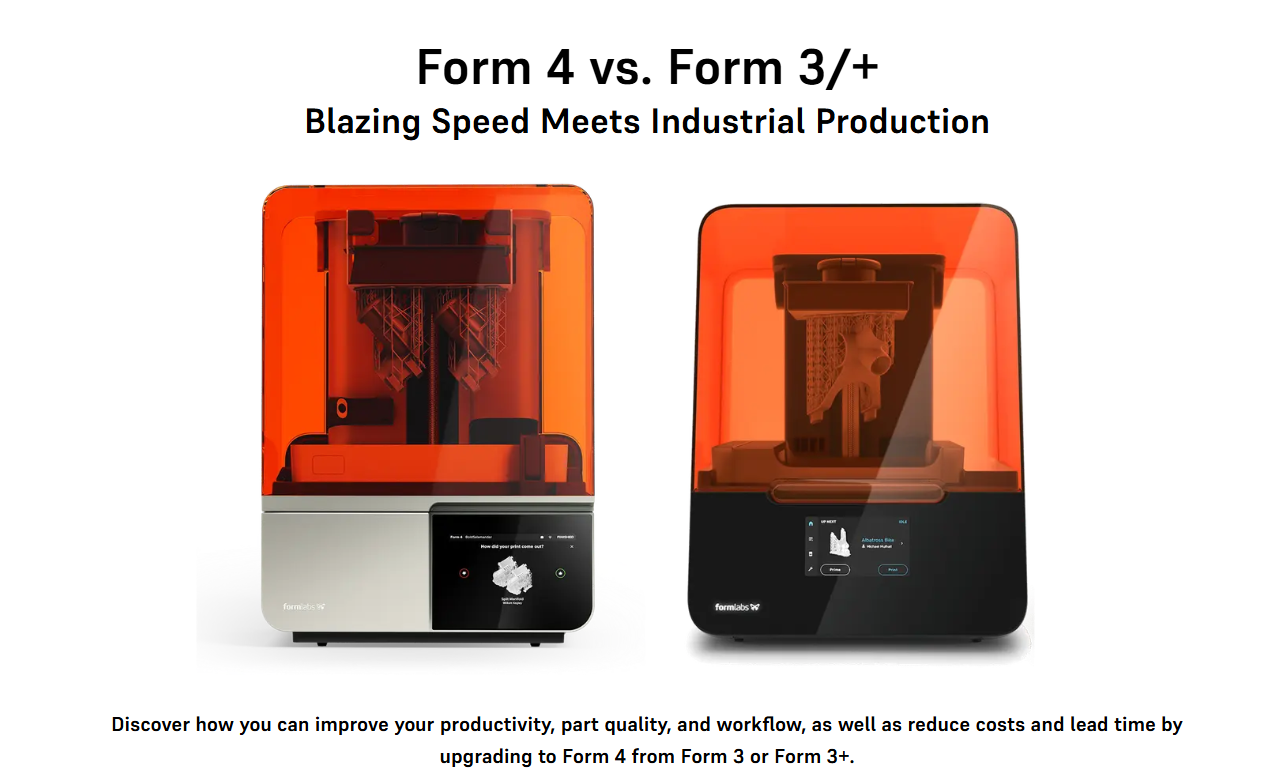
Yes, for most Form 3 and Form 3+ owners running regular prototyping or production volume, Form 4 is worth the upgrade. It prints 2 to 5x faster, holds 30% more build volume, and uses General Purpose Resins priced roughly 47% lower than the Form 3/+ equivalent. According to Formlabs' published Form 4 vs. Form 3/+ comparison data, the change comes from a new print engine, not just incremental tuning. Here's the question-by-question breakdown to see if it's time for an upgrade.
How much faster is the Form 4 than the Form 3/+?
Form 4 prints 2 to 5x faster than Form 3/+, driven by the new LOW FORCE DISPLAY (LFD) print engine. Average print speed rises from 11 mm/hour on Form 3/+ to 40 mm/hour on Form 4, with a maximum of 100 mm/hour versus 31 mm/hour. In practice, parts that took nearly 11 hours on Form 3/+ finish in under 2 hours on Form 4.
How much larger is the Form 4's build volume?
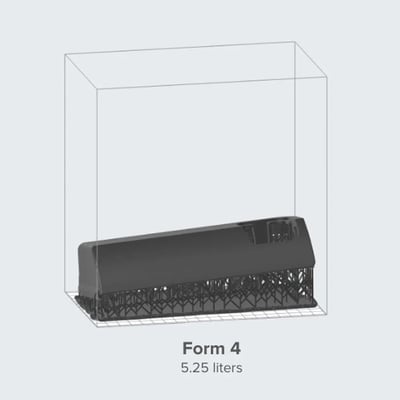
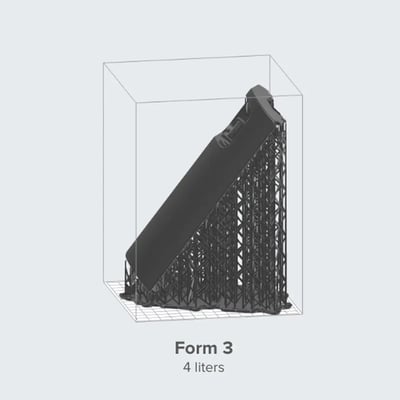
Form 4's build volume is 5.25 liters (20.0 x 12.5 x 21.0 cm), a 30% increase over the Form 3/+'s 4.05 liters (14.5 x 14.5 x 19.3 cm). Maximum part length grows from 22.4 cm on Form 3/+ to 27.3 cm on Form 4, a 22% increase. That means more parts per build, or the ability to print a design in one piece that previously required splitting across multiple runs.
How much do Form 4's new resins cost compared to Form 3/+?
Form 4's General Purpose Resins are priced at $79/L, compared to $149/L for the Form 3/+ equivalent, a roughly 47% reduction according to Formlabs' materials pricing. For a team printing once a day, that difference alone saves an estimated $5,000 over two years.
How much sharper is Form 4's print detail?
Form 4 resolves features down to 50 microns using pre-tuned anti-aliasing for subpixel resolution, compared to an 85-micron laser spot size and 25-micron XY resolution on Form 3/+. Dimensional tolerances on Form 4 reach ±0.15% on features between 1 and 30 mm (lower limit ±0.02 mm); Form 3/+ tolerances in this range were not measured by Formlabs.
How long do Form 4's tank and cartridge last compared to Form 3/+?
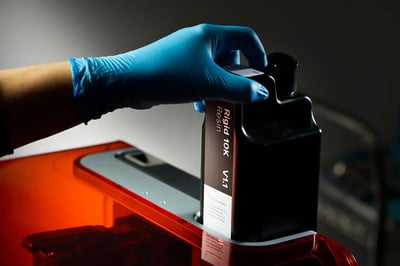
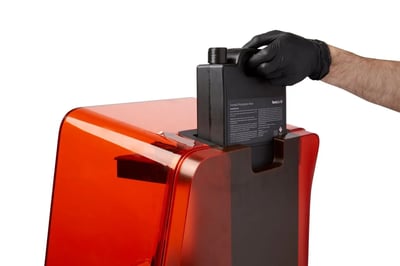
Form 4's resin tank handles 75,000+ layers with any material, roughly 190 prints on an average model (39 mm tall, 100-micron layer height). The Form 3/+ tank lasts 250 to 800 hours of printing depending on material, roughly 70 prints with Grey Resin V4 or 20 prints with Tough 2000 Resin at average print times. Form 4's redesigned cartridge also fills tanks 5 to 10x faster while cutting resin waste by 63% and required shelf space by 30%.
How much faster is Form 4's post-processing?
Form 4's Form Wash and Form Cure stations post-cure parts 2x to 8.6x faster than the Form 3/+ generation, with near-instant heat-up and pre-programmed cure settings validated for Formlabs resins (plus custom profiles for third-party materials). Form Cure reaches a maximum temperature of 100°C, and Form Wash adds 3x more agitation for consistent results.
Should you upgrade from Form 3/+ to Form 4?
If your Form 3 or Form 3+ is running steady prototyping or production volume, upgrading to Form 4 pays back through time and materials cost: faster prints mean more throughput per machine, and lower-cost, higher-performance resins mean a lower cost per part over the printer's lifetime. Teams already using Formlabs SLA for prototyping, tooling, or end-use parts get the same workflow in a fraction of the time.
See the specs in full detail on our Form 4 product page or explore Formlabs SLA materials guide for resin selection guidance. Want a quote for your shop? Contact AdvancedTek and we'll help map out the upgrade path.
AdvancedTek is a Midwest additive manufacturing partner serving organizations across manufacturing, medical, education, and engineering in Minnesota, Wisconsin, Iowa, Illinois, Kansas, Missouri, Nebraska, North Dakota, and South Dakota. As an authorized reseller for Stratasys, Formlabs, and EOS, AdvancedTek provides the equipment, materials, software, and application expertise companies need to adopt, scale, and optimize additive manufacturing in-house.